
September 4, 2026
Pipeline Right-of-Way Restoration: Putting the Land Back
What restoration involves after a pipeline goes in, from topsoil and grading to drain tile repair and reseeding, and why it starts before construction begins.
Key takeaways
- Restoration is planned before construction starts, not tacked on after the crew leaves.
- Topsoil gets stripped and stored separately during grading so it can go back on top once backfill is done.
- Farmland, forest, and wetland ground each restore differently, and the plan has to match the land.
- Restoration crews work the same spread as everyone else, moving through erosion control, grading, and reseeding in sequence.
- Ask a contractor how they handle drain tile repair and reseeding before you sign an easement.
A landowner stands at the fence line of a hay field, watching survey stakes go in, and asks the project manager the same question almost every landowner asks eventually: what is this field going to look like when it is over? It comes up at open houses, in easement negotiations, and again the day the crew finally rolls off the right-of-way. The honest answer is that restoration is not an afterthought tacked onto the end of a pipeline job. It is a planned phase with its own sequence, and it starts long before the first shovel goes into the ground.
Restoration comes up early in how a pipeline project actually gets built, because the way a right-of-way is cleared and graded on day one determines how well it can be put back later. It also shows up in the easement and land agreement a landowner signs, which usually spells out the restoration the contractor is obligated to deliver. Anyone weighing a route across their property, or a utility explaining the process to the public, is better served understanding what restoration covers before the crews show up.
It is also one of the more overlooked parts of a pipeline construction project when developers are comparing contractors. Bids get compared on schedule, price, and safety record, and restoration sometimes gets treated as a line item at the bottom of the scope instead of a real construction phase with its own sequence and its own way of going wrong. That is a mistake, because restoration is usually the part of the job that stays visible on the property for years after the pipeline itself is buried and forgotten.
What restoration actually covers
Restoration is the set of steps that return disturbed ground to a working condition close to what it was before construction. It is not one task, it is several, and they happen roughly in this order:
- Topsoil replacement, so the fertile ground that was set aside during grading goes back on top instead of staying buried under subsoil.
- Grading and contouring, so the ground drains and sits the way it did before, not as a raised or sunken scar across the property.
- Drain tile and fence repair, so anything crossed or cut during construction gets reconnected and functions again.
- Erosion control, both the temporary measures that hold soil in place right after backfill and the permanent stabilization that takes over once vegetation is established.
- Reseeding, matched to the land use, whether that is pasture, cropland, or a wooded corridor kept in low ground cover.
None of that is exotic work. It is careful, sequenced groundwork, and it is what separates a right-of-way that heals into the landscape from one that stays an obvious scar for years.
Restoration starts before construction, not after
The single biggest factor in how well a field restores is what happens to the topsoil before anything else begins. When the right-of-way is graded, the topsoil is stripped off and stored separately from the subsoil underneath it, rather than pushed into one mixed pile. That separation is what makes it possible to put the good ground back on top once the pipe is in and the trench is backfilled.
Skip that step, or handle it carelessly, and you end up with subsoil sitting at the surface where topsoil used to be. That ground will not grow the way it did before, no matter how much reseeding follows. Restoration quality is decided in the first week of a job, long before it looks like restoration is even underway.
Farmland, forest, and drainage each restore differently
Land is not uniform, and neither is the restoration plan. Cropland gets graded to match its original contour and reseeded to whatever the landowner is planting, with a strong emphasis on getting drainage patterns right, since a field that used to shed water correctly and now holds a wet spot is a real, lasting problem for a farmer.
Wooded ground restores differently. The permanent corridor above an active pipeline has to stay clear of deep-rooted trees so the line can be inspected and maintained for as long as it operates, but the disturbed edges outside that corridor return to low ground cover and natural regrowth. Pasture and grazing land sits somewhere in between, focused on getting a stand of grass established that will hold up to livestock again.
Drainage is its own thread running through all of it. Tile lines, ditches, and culverts crossed during construction have to be identified, protected where possible, and repaired where they are not, because a pipeline crew that gets the pipe in the ground but leaves a farmer’s drainage broken has not actually finished the job.
Marsh, wetland, and water crossings take extra care
Some ground does not restore the way a hay field does. Marsh and wetland construction carries its own access methods, environmental controls, and permitting requirements, and the restoration that follows is a specialized process rather than a standard grade-and-seed job. Matting used to protect soft ground during construction has to come out cleanly, and the disturbed area is stabilized and, where required, replanted to match the surrounding wetland vegetation.
Water crossings bring their own version of the same problem. Streambanks disturbed during construction need to be stabilized quickly, because moving water does not wait for a reseeding window the way a dry field does. Getting this part of the job right takes crews who have done it before, not just good intentions.
Backfill, contour, and erosion control on the schedule
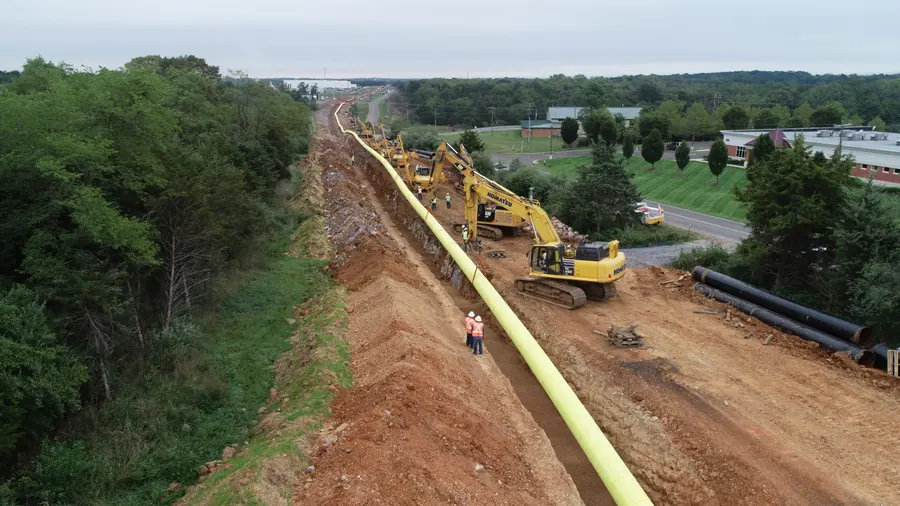
Once the line is lowered in, tested, and backfilled, the visible restoration work follows behind it down the right-of-way, the same way welding follows stringing and coating follows welding. Final grading brings the corridor back to its original contour. Temporary erosion control, silt fence, and check structures go in immediately to hold soil in place while vegetation gets started, and permanent measures take over as that vegetation establishes.
Timing matters here in a way that is easy to underestimate. Seeding has real windows tied to the season and the region, and an agency or landowner agreement will often specify how much ground cover has to be established before a job is considered closed out. Push seeding past its window and the restoration crew is stuck waiting on the next season, which can leave a landowner looking at bare ground for months longer than expected. A contractor that treats restoration as its own scheduled phase, staffed and sequenced like the rest of the spread, is a contractor that hits those windows instead of scrambling to catch up on them.
Restoration is part of the job, not an afterthought
It helps to think of restoration crews as one more link in the same chain as the crews clearing, welding, and backfilling the line. They are working the pipeline construction sequence just like everyone else, moving down the route behind the pipe rather than showing up as a separate project once construction wraps.
That framing matters because restoration is often the part of the job the public actually sees for years afterward. A welded joint gets buried and forgotten. A field that drains wrong, or a right-of-way that grows in unevenly, is visible every time someone drives past it. Treating restoration as a real construction phase, planned with the same care as the rest of the build, is what keeps that long-term impression a good one.
What to ask before you sign
If you are a landowner reviewing an easement, or a utility fielding questions at a public meeting, restoration is one of the more concrete things you can ask a contractor to walk through in detail. Ask how they handle topsoil segregation, how they repair drain tile, what seed mix and timing they use, and what happens if the first seeding does not take. Those are the kind of specific, practical questions worth adding to any list of questions to ask a pipeline contractor, and the answers tell you a great deal about how the rest of the job will be handled.
A contractor who can describe the restoration sequence in detail has done it before and expects to be held to it. One who gives a vague answer about seeding the ground when they are done has probably not thought much past the pipe itself, and that gap tends to show up later, in a field that never quite drains right.
If you are planning a pipeline route and want to understand how restoration fits into the schedule and the easement terms for your project, get in touch and tell us about the land. We can walk through what restoration looks like for your specific route before you request a bid.
Frequently asked questions
What does pipeline right-of-way restoration include?
It covers replacing topsoil, grading the ground back to its original contour, repairing any drain tile or fence disturbed by construction, installing erosion control, and reseeding. The goal is land that functions the way it did before the crew arrived, not just land that looks filled in.
When does restoration happen in a pipeline project?
Some of it starts on day one, when topsoil is stripped and stored separately during grading so it is not lost or mixed with subsoil. The visible restoration work, backfilling, contouring, and reseeding, follows behind the crews lowering in and testing the line, moving down the right-of-way in the same sequence as the rest of the spread.
Can farmland be farmed again after a pipeline crosses it?
Yes. Once the topsoil is replaced and the ground is graded back to its original contour, farmland typically goes back into production. Any drain tile disturbed by construction gets repaired so the field drains the way it did before, which matters as much to a farmer as the surface itself.
Does the right-of-way get replanted with trees?
Not directly over the pipeline. The corridor above an active line is kept clear of deep-rooted vegetation so it can be inspected and maintained, but ground cover is reestablished, and the disturbed area outside the permanent corridor can return to its natural state.
Is restoring marsh or wetland ground different from restoring a field?
Yes. Wetland and marsh construction carries its own environmental controls and permitting requirements, and restoration there is a specialized part of the job rather than a standard grade-and-seed process. It is closely tied to how the ground was accessed and protected during construction in the first place.