Core Construction
Pipeline Construction: Transmission and Distribution
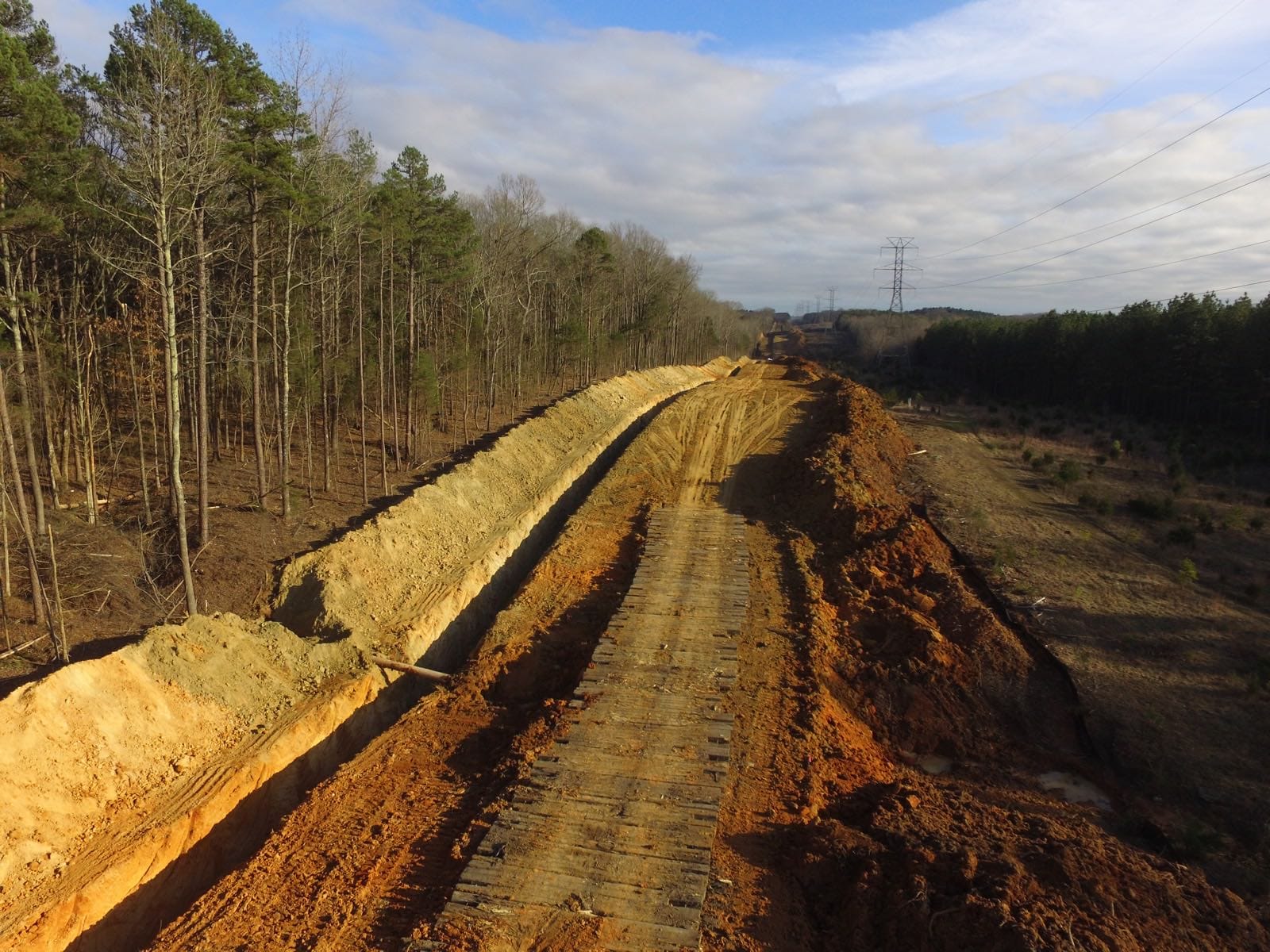
Pipeline construction is the work of putting a pipeline in the ground: clearing and grading the right-of-way, stringing and welding the pipe, coating and inspecting the welds, lowering it in, backfilling, testing it, and restoring the land. We build both transmission lines (the big cross-country and large-diameter pipe that moves product long distances) and distribution lines (the smaller pipe that ties into the system), for natural gas, oil, and refined products. We are capable of self-performing the work with our own union crews, scaling spreads and crews to the job.
Key Takeaways
- We build both transmission (large-diameter, cross-country) and distribution pipelines.
- Natural gas, crude oil, and refined products lines, all self-performed by our own crews.
- A pipeline gets built in stages: grade, string, weld, coat, lower-in, backfill, test, restore.
- Project range runs from short distribution runs to large-diameter cross-country mainline.
- 1 Clear & grade
- 2 String pipe
- 3 Weld & inspect
- 4 Coat joints
- 5 Lower in
- 6 Backfill
- 7 Hydrotest
- 8 Restore
Transmission vs. distribution: what is the difference
A transmission pipeline is the long-haul part of the system. It is usually larger diameter, runs at higher pressure, and moves gas or liquids over long distances, sometimes hundreds of miles across country. Distribution pipe is what steps down off that system and carries product the shorter distances to where it is used. Both take real expertise to build right, and both are work we self-perform.
When a data center or power plant needs gas, the question is usually how to tie into a transmission system and what it takes to get there. That is the kind of scope we handle end to end.
How a pipeline project comes together, stage by stage
Most people never see how a pipeline actually gets built, so here is the short version. First we clear and grade the right-of-way so crews and equipment can work. Then the pipe gets strung out along the ditch, bent to match the terrain, and welded into one continuous line. Every weld gets inspected, the joints get coated, and then the line is lowered into the trench and backfilled.
Before anything flows, the line is hydrostatically tested to prove it holds pressure with no leaks. Last, we restore the right-of-way and put the land back the way we found it. Each of those stages is a crew and a skill set, and stacking them in the right order is what keeps a job on schedule.
Large-diameter and cross-country work
Do not let anyone tell you we are too small for the big jobs. Capacity in this industry comes from spreads and crews, not the line on a map. We scale crews and superintendents to the project, which is how a 20-mile job and a 60-mile job get stacked the same way. The longer one just runs longer.
If you have a transmission or distribution scope and you are weighing who can actually handle it, that is a conversation worth having with us before you lock anything in.
Capabilities
What we do in this area
Large-Diameter & Cross-Country
Appalachian Pipeline builds large-diameter, cross-country transmission pipeline, scaling spreads and crews to the job.
Gas, Oil & Refined Products
Appalachian Pipeline builds pipelines for natural gas, crude oil, and refined products, on both transmission and distribution scopes.
Good to know
Frequently asked questions
Ready to go deeper?
A short closing line that points the reader toward the primary action.