
August 25, 2026
Right-of-Way Easements: How Pipeline Land Agreements Work
What a pipeline right-of-way easement actually grants, who negotiates it, and why land agreements often set the pace of a project's schedule.
Key takeaways
- A right-of-way easement grants the right to build and maintain a pipeline across land. It does not transfer ownership of the land itself.
- Easements are land agreements negotiated with private owners, separate from the government permits that approve a crossing.
- A temporary construction easement is wider than the permanent right-of-way and closes out once restoration is finished.
- Land agreements run on their own timeline, tract by tract, and rushing them is a common way to lose a schedule you thought was locked.
- Ask early whether the right-of-way is secured on every segment before you commit to a start date.
A power developer had the permits nearly wrapped up, a contractor lined up, and an energization date circled on the calendar that a lot of other work was scheduled around. Then someone asked a question that had not come up yet: has anyone actually reached an agreement with the three landowners the route crosses on its way to the tie-in point. The permits covered the road crossing and the water crossing. Nobody had covered the land in between.
That gap catches a lot of first-time buyers off guard, especially data center and power developers who are used to thinking about a site, not a route. A permit tells you a government agency has approved how a crossing will be built. It says nothing about whether the private landowner along that stretch has agreed to let a pipeline cross their property at all. That agreement is a separate piece of paper, called an easement, and it belongs on the same hiring checklist as permitting and contractor selection, not an afterthought once everything else looks finished.
This post walks through what a right-of-way easement actually is, how it differs from the permits that get most of the attention, and why the land agreements along a route can end up setting the pace of the whole project.
What an easement actually grants
An easement is a legal right to use a defined strip of someone else’s land for a specific purpose. In pipeline work, that purpose is building, operating, and maintaining a line. The landowner keeps title to the property. They can typically still farm it, graze it, or otherwise use it, subject to limits the agreement spells out, such as not building a structure over the pipeline or not planting deep-rooted trees along the strip. What they give up is exclusive control of that narrow corridor, in exchange for compensation and the terms both sides agree to.
It helps to think of it less like a sale and more like a long-term lease on a very specific use. The pipeline company gets what it needs to build and maintain the line. The landowner keeps the land and the rest of its uses. Getting that balance right, on paper, in terms both sides can live with for decades, is the entire point of the negotiation.
Permanent right-of-way versus temporary construction easement
Most agreements actually cover two different strips of land, and it is worth knowing the difference.
- The permanent right-of-way is the narrow strip the finished pipeline occupies, along with the access the operator needs to inspect and maintain it for the life of the line. This easement stays in effect indefinitely.
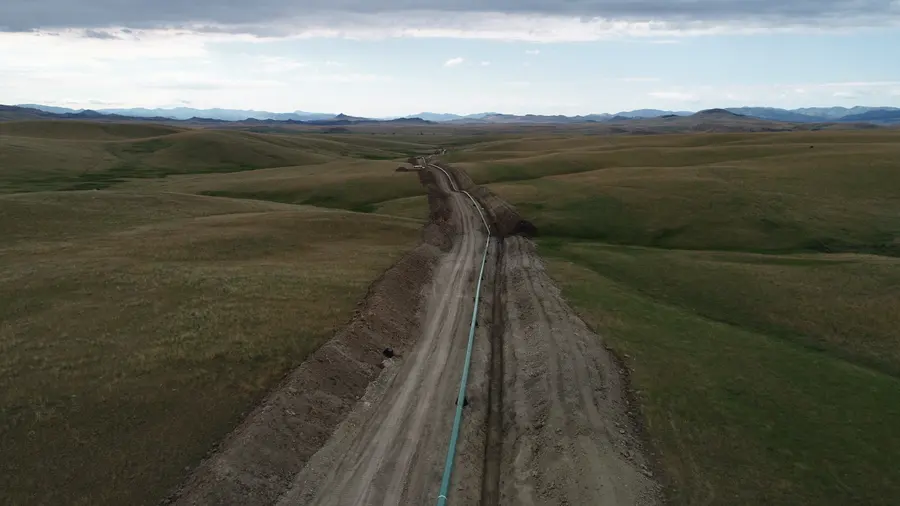
- The temporary construction easement is wider. It covers the extra room a crew needs while building: room for equipment to pass, soil to be stockpiled, and pipe to be strung and welded before it goes in the ground. Once the line is in, tested, and the ground is restored, this workspace closes out and reverts fully to the landowner.
Confusing the two causes real friction in the field. A landowner who expects the disturbed footprint to shrink back to the permanent strip right after backfill, and a crew that still needs the wider temporary workspace for restoration equipment a few more weeks, are working from two different pictures of the same agreement. A contractor who reads the easement carefully, not just the construction drawings, is less likely to create that kind of surprise.
Who negotiates the agreements, and how
Easements get negotiated tract by tract, which is a different rhythm than permitting. A permit application goes to one agency and covers the whole crossing that agency oversees. A right-of-way agreement has to be reached separately with every landowner the route touches, and a route of any real length can cross dozens of parcels, each with a different owner, a different set of concerns, and a different pace of response.
Typically it is the pipeline company or land agents working on its behalf who handle this, meeting with owners directly, walking the proposed route across their property, and working out compensation and terms. Some landowners sign quickly. Others want to understand exactly what the strip will look like once construction is done, how their access roads or irrigation will be affected, or how the agreement handles a future sale of the property. None of that is unreasonable, and a rushed conversation tends to produce a slower agreement, not a faster one.
Good agents keep a simple habit at the center of the work: put the specifics in writing before the landowner signs anything. Width of the permanent strip, width and duration of the temporary workspace, restoration standards, and the compensation for both should all be spelled out, not left to a verbal understanding that two parties remember differently a year later. A landowner who feels like the agreement was explained plainly, in terms they could actually picture, is far more likely to sign promptly and stay easy to work with once equipment shows up.
Why land agreements run on their own clock
Here is the part that trips up a schedule built around permitting alone. Permits move through an agency review process that, while slow, is at least predictable in its structure. Land agreements move at the pace of a conversation with a person who owns the property and has every right to take the time they need.
A landowner who is out of town, weighing an offer, or simply cautious about a pipeline crossing their land is not a problem you can rush past with a phone call. Reaching a fair agreement sometimes takes weeks of back and forth, and if even one tract along the route is unresolved, that single agreement can hold up construction on that segment no matter how ready everything else is. It is the land equivalent of a single stubborn permit, and it deserves the same early attention that a tight timeline gives to permitting and long-lead materials.
How this shows up on a construction schedule
A crew cannot legally mobilize onto a tract until the easement covering it is signed. That is not a formality. It is the line between lawful access and trespass, and no contractor worth hiring will cross it just to hold a date.
In practice, this means the right-of-way status of every tract has to be tracked alongside the permit status of every crossing, because either one can become the bottleneck. A route with permits fully in hand but three unresolved land agreements is not ready to build, even though the paperwork most people watch closely looks finished. This is also where the stringing, pipe handling, and right-of-way maintenance work connects back to the land agreement itself. The temporary workspace a crew stages pipe and equipment on is only available because a landowner granted it, on terms that were negotiated well before the first truck showed up.
A contractor used to working from a finished right-of-way plans the spread around what is actually available to build on, not what the route map suggests. If a tract near the middle of a route is still open and everything on either side is secured, the practical answer is often to build the secured ends and work toward the gap, instead of holding the whole crew idle waiting on one signature. That kind of sequencing takes the land team and the construction team talking to each other from the start, not treating land and construction as separate projects that happen to share a route.
What to ask before you commit to a date
If you are a developer counting on a pipeline to reach your facility by a certain date, right-of-way status is worth asking about directly, not assuming is handled. A few questions are worth putting on the table early:
- Is the easement secured on every tract the route crosses, or only most of them.
- Who is handling the land agreements, and are they tracking status the same way permits are tracked.
- What happens to the schedule if one landowner needs more time than expected.
A straight answer to those questions tells you a lot about how carefully a project has actually been planned, and it is a fair companion to the other questions worth asking a pipeline contractor before you lock in a schedule.
Plan for the land, not just the permits
Permitting gets the attention because it involves agencies, applications, and formal review. Right-of-way easements get less attention because they happen quietly, one landowner conversation at a time, but they carry just as much power to hold up a project. A route is not ready to build until both are done, not just one.
We self-perform the construction once a right-of-way is in hand, and we have seen enough projects to know that checking land status early, alongside permits and materials, is one of the simplest ways to protect a schedule. If you are planning a route and want a straight read on what is likely to hold things up, get in touch and tell us about the project, even if all you have so far is a line on a map and a list of the parcels it crosses.
Frequently asked questions
What is a pipeline right-of-way easement?
It is a legal agreement that gives a pipeline company the right to build, operate, and maintain a line across a piece of land, along a defined strip. The landowner keeps ownership of the property and can generally keep using it, within limits the agreement sets, but they grant that specific strip for the pipeline and for access to maintain it.
How is an easement different from a permit?
A permit is an approval from a government agency, such as a state department of transportation or an environmental regulator, confirming a crossing meets that agency's standards. An easement is a private agreement with the landowner whose property the route crosses. A project typically needs both, and they run on separate tracks with separate timelines.
What is a temporary construction easement?
It is extra workspace, wider than the permanent right-of-way, that a landowner grants for the duration of construction. Equipment, stockpiled soil, and staging areas need more room than the finished pipeline does, so the temporary easement expires and reverts to the landowner once restoration is complete.
Who negotiates right-of-way easements for a pipeline?
Typically the pipeline company or land agents working on its behalf, meeting directly with each landowner along the route. It is negotiated tract by tract, since every parcel has its own owner, its own concerns, and its own agreement to reach.
Why does right-of-way status matter for a construction schedule?
Construction cannot start on a segment until the easement covering it is signed. An unresolved land agreement on even one tract can hold up a crew the same way an unresolved permit can, so checking right-of-way status early is one of the more reliable ways to protect a start date.