
June 30, 2026
Questions to Ask a Pipeline Contractor Before You Sign
The questions that actually tell you whether a pipeline contractor can do your job, written for buyers who have never hired one before.
Key takeaways
- The most useful questions are about how the work gets staffed and controlled, not about how polished the pitch looks.
- A contractor that self-performs its own crews controls quality and schedule directly, with fewer handoffs to go wrong.
- Current safety standing in the systems energy clients check is close to non-negotiable, so ask about it by name.
- Capacity is about spreads and crews and how a job gets stacked, not a mileage number.
- Ask who answers the phone when something changes at the ditch, because that person shapes your whole experience.
Picture a facility manager who has built plenty of things, just never a pipeline. The bids come in, the pitch decks all look sharp, and every contractor sounds confident. The problem is not a shortage of information. It is that none of it tells you who can actually do the work.
That is the situation this post is written for. If you have never hired a pipeline contractor, the hard part is knowing what to ask, and a glossy presentation does not move you any closer to an answer. The good news is that a handful of plain questions will separate the contractors who can run your job from the ones who are hoping to figure it out on your dime. These are the same questions an experienced energy buyer would ask, translated into language you can use before you have picked up the whole vocabulary. For a wider view of the process, our full guide on how to hire a pipeline contractor walks through what happens after the questions are answered.
Start with whether they self-perform the work
This is the first question for a reason. When a contractor runs its own crews, it controls quality and schedule directly, and there is no seam between the company you signed with and the people standing in the ditch. When the work gets subbed out, you add a layer, and that layer is where coordination problems tend to live. A missed handoff between a general contractor and a sub can cost you days, and you often find out about it after the fact.
Ask how much of the scope the contractor actually performs with its own people. On a pipeline job the scope is broad, so listen for the specifics: mainline transmission and distribution, horizontal directional drilling, hydrostatic testing, fabrication, meter stations and civil work, concrete coating, marsh and wetland construction, stringing and right-of-way. A contractor that self-performs across that range is one you can hold accountable, because there is nobody else to point to when something slips.
There is also a simpler reason self-performance matters to you as a buyer. A company that owns the crews and the equipment has invested in this work as its actual business, not as a brokerage that assembles a team for each job and disbands it afterward. That investment shows up in the people, who tend to stay together, learn the same standards, and carry the lessons from one project into the next. When you hire a subcontracting middleman, you are paying a margin for coordination you could get more reliably from a contractor that already has the whole crew under one roof.
Dig into safety standing, and ask by name
Safety is the fastest way to tell a serious contractor from a hopeful one, and you can judge it without being an expert. Energy clients do not take safety on faith; they check it through shared qualification systems. Ask the contractor whether their standing is current in each of these:
- ISNetworld
- Veriforce
- OQSG
Current standing in these is close to non-negotiable for real energy work, and a contractor that keeps it up to date is telling you something about how the whole company runs. A crew that documents and maintains its safety qualifications is usually the same crew that documents its welds and its testing. If you want the detail on what these programs actually verify, we cover it on our safety and compliance page.
Ask who answers the phone when something changes
Every pipeline project has a day when the plan meets the ground and something has to change. A rock shelf shows up where the survey said clay. A permit condition lands late. What matters in that moment is whether you can reach a person who can actually make a decision, not a chain of departments that each have to check with someone else.
So ask directly: who is my single point of contact, and will I be able to reach them when it counts? The honest answer tells you how the company is built. It is one of the reasons the best small and mid-size contractors stay privately owned, because fewer layers mean fewer people standing between you and a yes or a no. When ownership answers the phone, problems get solved at the ditch instead of getting escalated up a corporate ladder while your schedule burns.
Ask how they would crew your job, not how many miles
There is a tempting question that sounds smart and tells you almost nothing: how big a project can you handle? The mileage answer is easy to give and easy to fake. The better question is how the contractor would staff and run your specific job.
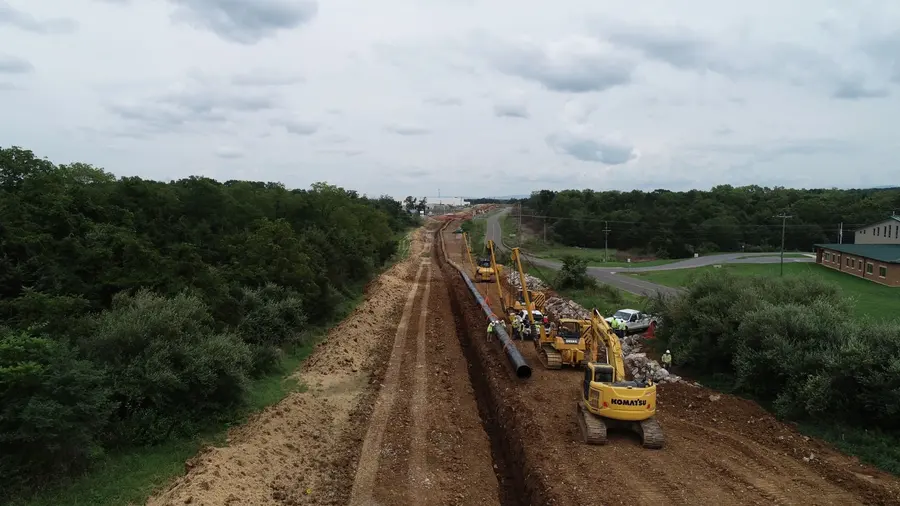
Capacity in pipeline construction comes from spreads and crews, not from a number on a map. A spread is the organized assembly of people and equipment that moves down the right-of-way in sequence, and how a contractor stacks that spread for your terrain, your soil, and your schedule is the real measure of whether they can deliver. If you want the mechanics of it, our explainer on what a spread is is a good primer. Listen for a contractor who answers with a plan, not a boast. Someone who walks you through how they would crew the work, where they would start, and how they would sequence the tricky sections is showing you real command of the job.
Talk through the delivery method before the price
New buyers often want a fixed price on day one, which is understandable. The more useful conversation is about how the project should be delivered, because the structure shapes the price and the risk far more than the initial number does.
A strong contractor will help you decide whether your job wants a design-build approach or a traditional bid package, rather than simply taking whatever you hand over. In design-build, the design and construction sit under one contract, so one team owns the whole outcome and there is no gap to argue about later. A bid package prices a design that is already finished, which fits when your engineering is complete and you want competitive pricing on a fixed scope. Our comparison of design-build and bid-build lays out where each one earns its keep. If you do not have pipeline expertise in-house, an EPC or design-build structure usually carries more of the risk for you, because the same firm is responsible for engineering, procurement, and construction as one accountable package.
Ask for references on a job like yours, and call them
References only mean something when they match your situation, so ask specifically for projects that resemble yours in size, setting, and complexity. A contractor confident in its work will not flinch at the request, and it will hand over names of clients who saw the hard parts, not just the ribbon cutting.
Then actually make the calls. Ask the reference about schedule and whether the contractor held it. Ask how communication went when a problem came up, because every real project has one. Ask the simplest and most revealing question of all: would you hire them again? The way a past client answers that will tell you more than any line item in a proposal.
Listen for how they talk about problems
There is one thing to notice that is not a question at all. Pay attention to how a contractor talks about the parts of a job that go sideways. The ones worth hiring do not pretend problems never happen. They describe how they catch issues early, how they document what they find, and how they keep you informed instead of managing the news. A contractor who is honest about difficulty before you sign is far more likely to be honest with you once the work is underway.
Run these questions across every contractor you are considering and the field usually sorts itself out quickly. You are not looking for the smoothest presentation. You are looking for the company that answers with real detail, keeps its safety current, runs its own crews, and picks up the phone.
If you are working through this list right now, point these questions straight at us. Get in touch and tell us about your project, even if all you have is a line on a map, and we will give you straight answers. You can start that conversation here.
Frequently asked questions
What is the single most important question to ask a pipeline contractor?
Ask whether they self-perform the work or sub it out. A contractor running its own crews controls quality and schedule directly, which removes the coordination gaps that show up when the job is handed to another company. It also tells you how deep their real capability goes.
How do I judge a contractor's safety without being an expert?
You do not have to be an expert. Ask about their standing in ISNetworld, Veriforce, and OQSG by name, and ask whether it is current. These are the same systems energy clients rely on, and a contractor that keeps them up to date is signaling a real safety culture.
Should I ask for a fixed price up front?
You can ask, but the better conversation is about delivery method first. Design-build and EPC bundle the design and construction under one contract, while a bid package prices a design that is already complete. The right structure depends on how far along your engineering is and how much risk you want to hold.
What if I only have a rough idea of the project?
That is normal and it is a fine place to start. A good contractor can talk through routing, permitting, and staffing from a line on a map and help you shape the scope. You do not need finished drawings to have a useful first conversation.
How many references should I actually call?
Call at least two, and make them projects that resemble yours in size and setting. Ask about schedule, communication when problems came up, and whether they would hire the contractor again. A confident contractor will hand over the names without hesitation.