
June 5, 2026
What Is Hydrostatic Testing on a Pipeline?
Before a new pipeline carries anything, it gets pressure-tested with water. Here is what hydrostatic testing is, why it uses water, and where it fits in the build.
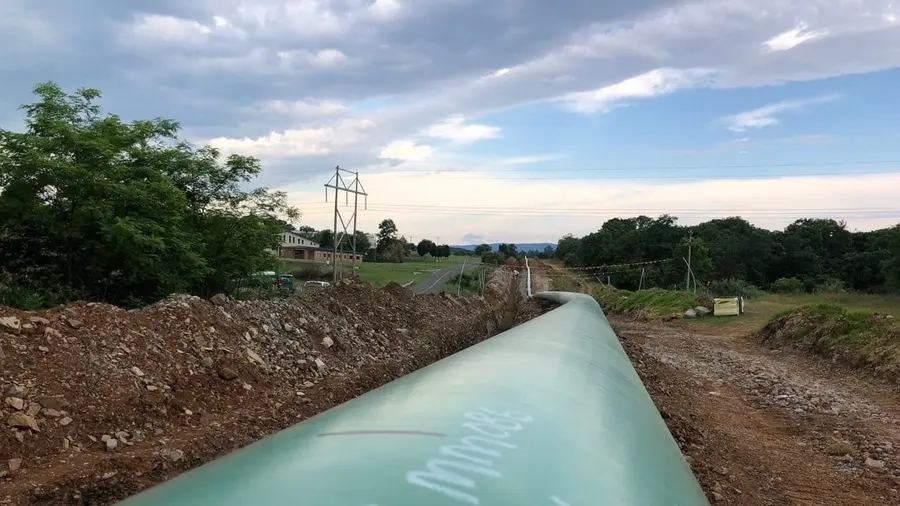
Key takeaways
- Hydrostatic testing fills a new line with water and raises the pressure well above normal operating pressure to prove the pipe and welds can hold.
- Water is used because it barely compresses, so it stores very little energy and keeps the test safe. Air stores far more energy and is dangerous to test with.
- The test comes near the end of construction, after the line is welded, coated, lowered in, and backfilled, and before the line goes into service.
- A steady hold with no pressure drop means the line passes. A drop points to a leak or a flaw that gets found and fixed before startup.
- A pressure test is how a contractor hands a client a line they can actually trust from day one.
Picture a developer who has watched miles of new pipe get welded, coated, and buried across a right-of-way. The construction looks finished, and the land is already graded back over the trench. Before anyone opens a valve and sends product through that line, though, there is one more question that has to be answered with proof instead of confidence: will it hold pressure? Hydrostatic testing is how that question gets answered.
Every new pipeline has to show that it can safely contain the pressure it will carry in service, and it has to show it before the first bit of gas or liquid ever goes through. That proof is exactly what a hydrostatic test provides. It is one of the last things that happens on a job, and it is one of the self-performed specialized services we treat as part of building the line rather than a box to tick at the very end. If you want to see where it lands in the larger sequence, it comes right near the finish of how a pipeline project comes together.
What hydrostatic testing actually does
Hydrostatic testing fills the new line with water and raises the internal pressure well above its normal operating pressure. Then that pressure is held for a set period and watched closely. If the pipe, the welds, and every fitting hold steady with no drop, the line passes. If there is a leak or a hidden flaw, the pressure finds it, and the problem gets located and fixed before the line ever goes into service.
The logic is simple, and that is part of why it works so well. You are deliberately pushing the pipeline harder than it will ever be pushed in normal operation, in controlled conditions, with people watching. A pipe that can survive a test above its working pressure has a real margin of safety once it settles into everyday service. Nothing about it is left to assumption. The line either holds the pressure or it does not, and the gauges tell you which.
Why the test uses water and not air
This is the question almost everyone asks first, and it is a good one. Water is used because it is nearly incompressible, so it stores very little energy under pressure. You can pressurize a water-filled line to a high number, and if something lets go, the pressure drops off fast and the energy has almost nowhere to go.
Air and gas behave in the opposite way. They compress, and a compressed gas holds a tremendous amount of stored energy, like a spring wound up tight. If a line under an air test fails, all of that energy releases at once, and that release can be violent and genuinely dangerous to anyone nearby. Testing with water keeps the energy low and the crew safe, which is the whole reason water is the standard for this kind of proof test. It is one of many places where the safety side of the work and the engineering side line up perfectly.
How a hydrostatic test is set up and run
A real test takes planning, not just a hose and a pump. The line, or a section of it, is isolated and filled with clean water, and the crew works the air out as they go, since trapped air would defeat the purpose of using water in the first place. On a longer run, the pipeline is broken into test sections that make sense for the terrain and the elevation changes along the route, because water is heavy and elevation adds real pressure of its own.
Once the section is full, pumps raise the pressure to the target and the hold begins. Getting there is done in a controlled way rather than all at once, so the crew can watch how the line responds as the pressure climbs and catch a problem early instead of at the peak. During the hold, the crew records pressure and temperature over time, and temperature matters more than people expect. Water expands and contracts with heat, so a warm afternoon or a cold night can nudge the readings even when the pipe is perfectly sound. Good testers account for that so a temperature swing is never mistaken for a leak, and a real leak is never explained away as a temperature swing. When the hold finishes clean, the section is documented, and the results become part of the record that follows the line into service.
The numbers behind the test
The specific test pressure and hold time are not arbitrary. They come from the pipe specifications, the material, the intended operating pressure, and the codes and standards that govern the line. In broad terms, the test pressure is set comfortably above the pressure the pipe will see in normal operation, which is what gives the finished line its safety margin. The hold time is long enough to be confident that a slow leak would reveal itself rather than hide.
The point of putting real numbers behind the test is accountability. When the test is over, there is a documented record showing the line was held above its operating pressure for the required time and did not lose pressure. That record is not paperwork for its own sake. It is the evidence a client, an operator, and a regulator can all point to that says this pipeline was proven before it was trusted with product.
Where it fits in the build
Hydrostatic testing comes near the very end of construction, after the line is welded, coated, lowered in, and backfilled. By the time the test runs, most of the heavy work is behind the crew, and the line looks finished from the surface. It is one of the last proof steps before the pipeline is put to work, and it is not a place to cut corners.
After a section passes, the water has to go somewhere, so the line is dewatered carefully, and depending on the service, it may be dried and cleaned before commissioning. All of this is part of handing over a line that is genuinely ready, not just physically complete. A pipeline that has passed its test and been properly prepared is one you can commission with confidence, which is the whole goal of doing the testing and commissioning end of the job well.
What happens when a test does not pass
Sometimes a section does not hold, and that is not a failure of the process. That is the process doing its job. A pressure drop tells you something is wrong, whether it is a leaking weld, a fitting that needs attention, or a flaw in the pipe itself. The alternative, finding that same weakness after the line is in service and carrying product, is the outcome the test exists to prevent.
When a section drops pressure, the crew isolates it, works to locate the source, makes the repair, and runs the test again. A line does not move on until it holds, full stop. Depending on where the trouble sits, tracking it down can take patience, and there is no shortcut that skips the retest. That discipline is exactly why a pressure test is worth trusting, because a passing result is only meaningful when a failing one truly stops the line. It is also one of the reasons it pays to understand a contractor’s approach to testing before you sign, which is one of the better questions to ask a pipeline contractor early in a conversation.
Why it is worth doing right
A pressure test is how a contractor hands a client a line they can actually trust from the first day it goes into service. Everything upstream of it, the welding, the coating, the lowering-in, gets its final validation here, so treating the test as an afterthought undercuts all the careful work that came before it.
We self-perform hydrostatic testing rather than farming it out and managing it from a distance, which means the crew that built the line is the crew that proves it. That continuity, along with a safety standing we keep current, is a big part of what it means to build a pipeline the right way. If you have a project coming up and want to understand the testing and commissioning end of it, get in touch and tell us about your line, even if all you have so far is a route on a map. Start the conversation on our contact page.
Frequently asked questions
What is hydrostatic testing on a pipeline?
It is a pressure test that fills a new line with water and raises the internal pressure well above its normal operating pressure. The pressure is held for a set period and watched. If the pipe and welds hold with no drop, the line passes.
Why is water used instead of air?
Water is nearly incompressible, so it stores very little energy under pressure. Air and gas compress and hold a large amount of stored energy, which makes a failure during an air test dangerous. Water keeps the test safe, which is why it is the standard.
When does hydrostatic testing happen?
It comes near the very end of construction, after the line is welded, coated, lowered in, and backfilled. It is one of the last proof steps before the pipeline is put to work.
What happens if a pipeline fails the test?
A pressure drop tells you something is wrong. The crew isolates the section, locates the leak or flaw, repairs it, and runs the test again. The line does not go into service until it holds.
Who performs the hydrostatic test?
It can be a subcontractor, but we self-perform hydrostatic testing as part of our specialized services. Keeping it in-house means the crew that built the line is the crew that proves it, and nothing gets managed from a distance.