May 15, 2026
What It Means to Be a Union Contractor Signatory to Four Crafts
What a union pipeline contractor signatory to four crafts really means: trained, qualified crews on the right-of-way and the ability to self-perform the scope.
Key takeaways
- A craft is a trade, and a signatory contractor has agreements to hire that trade's trained, qualified union workers.
- Signatory to four crafts means the operators, welders, laborers, and teamsters on your job all come from vetted union hiring halls.
- Union training and qualification are one of the ways a contractor keeps welds sound and equipment in the right hands.
- Being signatory across the crafts is what lets a contractor self-perform the scope instead of subbing trades out.
- It pairs with safety standing in ISNetworld, Veriforce, and OQSG to show a client the people are ready.
Picture a developer who has a route on a map, a schedule that leaves little room to slip, and a simple question about the contractor bidding the work: who is actually going to be out there, and are they good? It is a fair thing to ask. The pipe and the equipment matter, but the people welding the joints and running the machines decide whether the job goes smoothly or turns into a series of expensive corrections.
That is why the phrase “union contractor signatory to four crafts” is worth slowing down on. It sounds like a line of jargon, but it answers exactly that question. It says something specific about who is doing the work on your right-of-way, how they were trained, and how much of the job the contractor can self-perform without handing pieces off to strangers. It also sits right next to the safety systems energy clients already lean on when they vet a contractor.
What a craft is, and what signatory means
Start with the two words that carry the weight. A craft is a trade, a defined body of skilled work with its own training, testing, and qualification path. Welding is a craft. Operating heavy equipment is a craft. The people who do that work belong to unions that own the training and hold their members to a standard.
A signatory contractor is one that has signed an agreement with a trade’s union. That agreement lets the contractor hire that trade’s trained, qualified workers through the union hall. It is not a loose handshake. It commits the contractor to certain wage and benefit terms, and in exchange it gives access to a workforce that has already gone through apprenticeship, testing, and ongoing qualification.
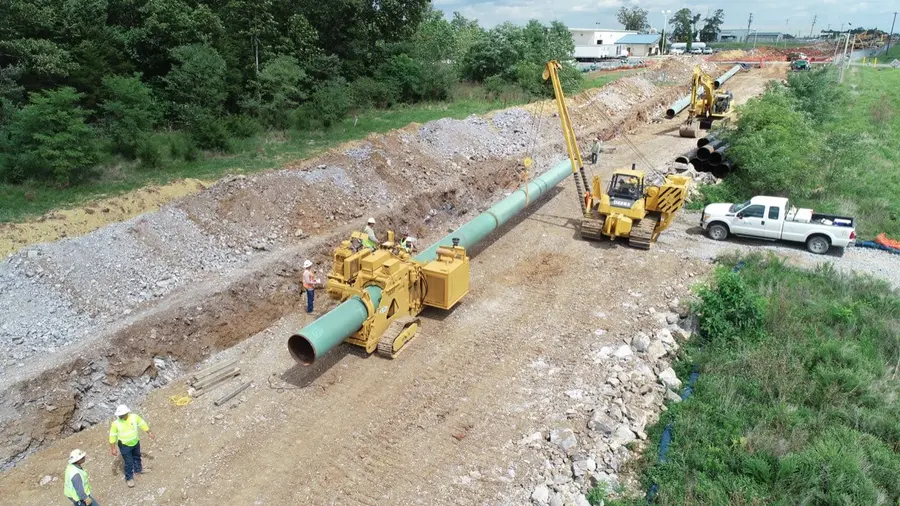
So being signatory to four crafts means the contractor holds those agreements with four separate trades. On a pipeline, that generally covers the core trades the work depends on: the operators who run the sidebooms and excavators, the welders who make the joints, the laborers who handle a wide slice of the field work, and the teamsters who move material and equipment. Put plainly, the people on the right-of-way are trained and qualified, and the contractor can prove where they came from.
Why it matters more on a pipeline than on an average job
Plenty of construction work tolerates a learning curve. Pipeline work does not forgive shortcuts in the same way. A weld either passes inspection or it does not. An operator either lowers a section of coated pipe into the trench cleanly or risks damaging the coating that protects it for decades. A mistake is rarely a small mistake, because the line has to hold pressure and stay sound long after the crew has moved on.
Pulling from a trained union workforce is one of the ways a contractor keeps quality and safety where they need to be. The welders arrive already tested against a procedure. The operators have logged real hours on real equipment. That does not remove the need for supervision and inspection, but it means the baseline is high before anyone sets foot on the job. When energy clients vet a contractor, the quality of the workforce is a large part of what they are checking.
There is a cost angle here too, and it is worth being honest about. Union labor comes with defined wage and benefit rates, so on paper the hourly number can look higher than a nonunion bid. What that number leaves out is rework. A weld that fails inspection has to be cut out and redone, and every failed joint drags on the schedule and the budget. A crew that is trained and qualified before it arrives tends to make fewer of those mistakes, which is often where the real savings live. On safety-critical work, the cheapest crew and the least expensive job are rarely the same thing.
The four crafts and how they fit together
It helps to see how the trades share the work, because none of them builds a pipeline alone. The operators handle the machines that dig the trench, string the pipe, and set it in place. The welders join the sections and lay down the passes that an inspector will scrutinize. The laborers cover an enormous range of tasks that keep the spread moving, from prepping the ditch to backfill and cleanup. The teamsters keep material, pipe, and equipment flowing to where the crew needs them.
When one contractor is signatory across all of these crafts, the trades work as a single organized effort rather than a patchwork of separate companies trying to coordinate at the seams. The handoffs happen inside one operation, under one set of supervisors, on one schedule. That coordination is where a lot of jobs are won or lost.
How being signatory ties to self-performing the work
This is the practical payoff, and it is easy to miss. Being signatory across the crafts is what lets a contractor self-perform the scope of a job instead of subbing trades out. A company that is signatory to only one trade has to hire other companies to cover the rest, then manage those subcontractors from a distance and hope their standards match.
A contractor signatory to four crafts can field its own qualified crews across the range of trades a pipeline needs, from the operators running equipment to the welders making the joints. That keeps control of quality and schedule in one place, which is exactly where clients want it. When a problem shows up in the field, and something always does, there is no finger pointing between trades. The same organization owns the fix. Self-performing also means the people who show up on day one are the people who finish the job, so the knowledge built early does not walk off the site halfway through.
It also changes how a project is planned. When the same company controls every trade, it can sequence the work to keep crews productive instead of waiting on a subcontractor to free up a crew somewhere else. Equipment gets shared across the trades. Supervisors can shift people to where the day actually needs them. A schedule that is held together by outside subs is only as reliable as its weakest partner, and on a long right-of-way that fragility tends to show up at the worst possible moment.
Where it sits next to safety and compliance
Union standing is one leg of the stool. It answers whether the people are trained and qualified. The safety and compliance systems answer whether the contractor manages risk in a way a serious client can verify. The two work together.
Energy clients check contractors through platforms built for exactly this: ISNetworld and Veriforce for collecting and verifying safety and compliance records, and OQSG for operator qualification. A contractor that keeps current standing across those systems and is also signatory to four crafts has covered both questions at once. The paperwork is clean, and the people behind the paperwork are ready. You can read more about how those systems fit together on our safety and compliance page.
What to ask, and how to read the answer
If you are weighing contractors, this is a simple thread to pull. Ask which crafts they are signatory to. Ask how much of the scope they self-perform with their own crews versus how much they sub out. Ask for current standing in the compliance systems your project requires. The answers tell you whether you are hiring an organization that can staff and run the whole job, or a general manager who will assemble a crew of strangers once the contract is signed.
A contractor that self-performs across the scope should be able to walk you through mainline transmission and distribution, horizontal directional drilling, hydrostatic testing, fabrication, meter stations and civil work, concrete coating, marsh and wetland construction, and stringing and right-of-way, and staff each of those with qualified people. You can see the range of that work on the services page, and see how it comes together on real jobs in the work section.
The bottom line
Strip away the jargon and being a union contractor signatory to four crafts comes down to a plain promise. Trained people, qualified to do the work, that the contractor can field itself rather than borrow. On safety-critical construction, that is not a slogan. It is the difference between a job that runs and a job that leaks time and money at every handoff.
Get in touch and tell us about your project, even if all you have is a line on a map. We are happy to walk through how we would staff it, which crafts the scope calls for, and how we keep quality and schedule in our own hands from start to finish. Reach out through the contact page and start the conversation.
Frequently asked questions
What does signatory to four crafts actually mean?
It means the contractor holds labor agreements with four separate trade unions and hires trained workers through their halls. On a pipeline that typically covers the trades you need to build the line, from the people running equipment to the welders joining the pipe.
Which crafts are involved on a pipeline job?
Pipeline construction usually leans on operating engineers, welders, laborers, and teamsters. Each one owns a piece of the work, and a contractor signatory across those crafts can field all of them under one roof.
Does being union make a pipeline project cost more?
Union labor carries defined wage and benefit rates, but you are paying for people who are trained, tested, and qualified before they reach the right-of-way. On safety-critical work, fewer mistakes and less rework often protect the schedule and the budget.
How does being signatory connect to self-performing the work?
Because the contractor can staff every trade from union halls, it does not have to sub trades out and manage them from a distance. It fields its own crews across the scope, which keeps control of quality and schedule in one place.
How do I verify a contractor's union and safety standing?
Ask for the crafts they are signatory to and for their current standing in the systems clients check, such as ISNetworld, Veriforce, and OQSG. A serious contractor will share it without hesitation.