
July 31, 2026
The Pipeline Partner for EPC and Design-Build Firms
What it means to be the self-perform pipeline partner an EPC or design-build firm hands a gas line scope to, and how the partnership actually works.
Key takeaways
- We step in as a self-perform pipeline partner when a design-build or EPC project comes with a gas scope the lead firm does not build in-house.
- The client relationship stays yours. We take the pipeline scope and answer for it, not the account.
- Self-performed crews mean fewer subs stacked under a sub, fewer hand-offs, and a schedule that holds.
- We can take a defined construction scope or carry design and permitting too, depending on what the project needs.
- Current standing in ISNetworld, Veriforce, and OQSG covers most of the vetting your client will already expect.
A design-build firm wins a large contract to build a power facility, and everyone on the team is focused on the plant itself: the turbines, the switchgear, the civil work on the pad. Then someone gets to the utility drawings and finds a gas line that has to be built to feed the thing, and it is not a short tie-in. It is a real pipeline scope, with its own permits, its own crossings, and its own crews, and none of that lives inside the firm that just won the job.
That is a more common moment than people expect. Design-build and EPC firms are experts at the facility, not at land pipe, and gas pipeline work is a specialized trade most general contractors touch once every few years rather than every day. When it shows up buried in a scope of work, the honest move is to bring in a pipeline partner who already knows how to build it, instead of trying to learn the trade under a deadline. Our post on what an EPC pipeline contract actually is covers the delivery model in more depth if the terminology itself is new to your team.
This is not a rare corner case anymore. As more data centers, power plants, and large industrial sites need dedicated gas service, more design-build and EPC firms are winning contracts that include a pipeline scope they never expected to carry. The projects keep getting bigger and the timelines keep getting tighter, and the firms that plan for this early tend to have a much easier time than the ones that discover it midway through construction.
Why the pipeline scope ends up with someone else
Most design-build and EPC firms are built around a facility: a data center, a power plant, an industrial site. Their engineers, their project managers, and their field superintendents are excellent at that work, because they do it constantly. Land pipeline construction is a different discipline entirely, with its own permitting process, its own welding and inspection standards, and its own equipment, and very few facility-focused firms keep that capability in-house year round.
The result is that pipeline scope tends to arrive as a surprise line item rather than a core competency. It shows up in a utility drawing or a permit condition, and suddenly the project team needs a contractor who has actually built a line before, not a generalist who is willing to learn on this job. That is the gap we fill when a firm brings us in as the pipeline partner underneath their contract.
What it means to hand off the pipeline scope
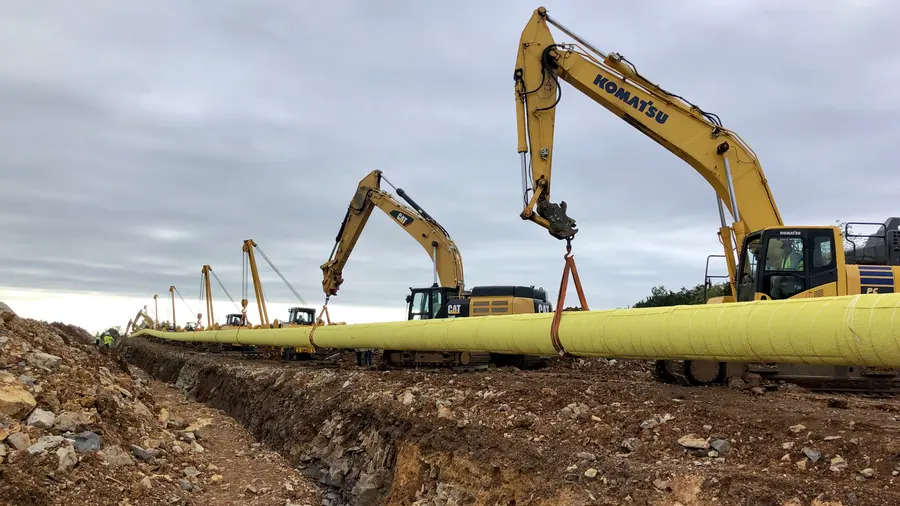
Handing the pipeline portion to a partner does not mean losing visibility into it. It means the day-to-day burden of building it correctly and on schedule moves to a contractor whose entire business is built around that work. We self-perform the mainline construction, the crossings, the tie-ins, and the station work with our own crews, so the lead firm is not managing a chain of sub-subs and hoping the pieces line up.
That matters more than it sounds like on paper. Every extra layer of subcontracting is a place where communication slips and schedule risk hides. When a general contractor hires a pipeline subcontractor who then subs out welding, subs out crossings, and subs out station work, nobody on that chain has full accountability for the whole scope. Bringing in a self-perform partner collapses that chain back down to one party who answers for the result.
It also simplifies who your project team talks to when something needs to change. A field condition shifts, a permit comes back with a new condition, or a crossing turns out to be more involved than the drawings suggested, and instead of tracking down which sub owns which piece of the pipeline scope, there is one superintendent who can answer for the whole line. That kind of clarity is worth more on a tight schedule than it looks like on an organization chart.
The client relationship stays with you
One thing that tends to worry design-build and EPC firms the first time they consider this arrangement is losing control of the client relationship. That concern is understandable, and it is also not how this usually works. The lead firm keeps the primary relationship with the owner. We take the pipeline scope and report through whatever structure the lead firm sets up, whether that is regular progress updates, joint site meetings, or a single point of contact who rolls our reporting into the broader project update.
From the client’s side, the project still has one lead contractor. From the lead firm’s side, the pipeline portion is no longer something that has to be actively managed day to day, because it sits with a partner built specifically to carry it. That combination, a single accountable relationship out front and a specialized crew underneath, is the whole reason this kind of partnership exists.
What we bring to a project like this
The scope varies from job to job, but a few things stay constant regardless of what a particular project needs from us:
- Self-performed mainline, crossing, and tie-in construction with our own qualified crews
- Meter station and civil construction where the line ties into a facility
- Design-build capability if the lead firm wants the pipeline portion engineered and permitted, not just built
- Current safety and prequalification standing, so we clear the vetting your client will run before pipeline work can start on their site
Some lead firms already have a fully engineered pipeline package and just need a capable contractor to build it. Others want the pipeline portion designed, permitted, and built as one arrangement so their own team never has to touch it directly. We can work either way, and we would rather understand which one fits your project than assume.
How the arrangement gets structured
There is no single template for these partnerships, because the projects that need them are not identical. On some jobs we sign on as a straightforward subcontractor executing a defined scope of work. On others, particularly where the pipeline portion is more involved, the arrangement looks closer to a design-build relationship nested inside the larger project, where we own engineering and permitting for the pipeline piece while the lead firm owns the facility.
What stays consistent is the accountability. Whatever the structure, one contractor answers for the pipeline scope, and the lead firm has a single point of contact instead of a list of vendors to coordinate. If you are still weighing what structure fits a specific project, our breakdown of fixed-price versus cost-plus pipeline contracts is a reasonable next read, since the same considerations apply whether the client is an owner or a lead contractor.
Bringing us in early protects the schedule
The earlier a pipeline partner joins the project, the more schedule risk gets removed before it becomes a problem. Permitting is usually the least flexible part of a pipeline timeline, and routing decisions made without pipeline expertise in the room can lock in a path that turns out to be slower or more expensive to permit than a different option would have been.
That does not mean late is disqualifying. We take on projects where the pipeline scope is already defined, permitted, and ready to build, and we simply execute it well. But if the project is still being planned, getting a pipeline partner into that conversation early is the single best thing a lead firm can do to keep the gas scope from becoming the item that slips the whole schedule. Our EPC and design-build overview walks through how that early coordination tends to play out on a typical project.
A partner who fits into your project, not around it
The firms that call us are not looking to hand off responsibility for their project. They are looking for a pipeline partner who fits cleanly into a project they are already running, handles the specialized scope competently, and does not become another management burden. That is the partnership we are built for, and it is a growing part of our work as more design-build and EPC firms take on projects with a gas pipeline component they were not necessarily expecting.
If your project has a pipeline scope and you are trying to figure out who should carry it, get in touch and tell us what the project needs, even if all you have right now is a set of drawings and a schedule you are trying to protect. Request a Bid and we will give you a straight read on what the pipeline portion actually takes, before it becomes the thing holding up your project.
Frequently asked questions
Will Appalachian Pipeline work as a subcontractor to an EPC or design-build firm?
Yes. We regularly take the pipeline portion of projects led by other firms, self-performing the work so the lead contractor has one accountable pipeline partner instead of a scope to manage piece by piece.
Do you need to be brought in from the start of the project?
It helps, but it is not required. Bringing us in while routing and permitting are still open gives the most schedule protection, though we also take on projects where the pipeline scope is already defined and just needs a capable contractor to build it.
Can you handle design and permitting, or only construction?
Both, depending on what you need. Some lead firms hand us a fully engineered scope to build; others want the pipeline portion designed, permitted, and built under one arrangement so they never have to touch it directly.
Who does the client deal with once you are on the project?
That is up to the arrangement, but in most cases the lead firm keeps the primary client relationship and we work the pipeline scope underneath it, reporting through the channels the lead firm sets up.
What safety and prequalification standing do you carry?
We hold current standing in ISNetworld, Veriforce, and OQSG, which covers most of what an owner or client will require before a pipeline scope can move onto their site.